
Important Steps for Beginners to Filing Income Tax Return- kolkata
Filing your Income Tax Return (ITR) for the first time is a significant financial milestone. However, with regular updates to the Finance Act, it is easy to feel overwhelmed by shifting tax slabs, differing registration rules, and compliance requirements. Whether you are stepping into your first corporate job or setting up a freelance practice, navigating your tax responsibilities does not have to be stressful. This guide provides a clear roadmap to successfully complete your first ITR filing with accuracy.
Sneha Das
7/8/20264 min read

1. Gather and CrossCheck Your Essential Documents
Before opening the e-filing portal, consolidate all your financial records. Attempting to file without a complete checklist can result in mismatches between what you report and what is on record with the Income Tax Department.
Identity Mapping: Ensure your PAN and Aadhaar Card are linked. The e-filing system will not accept your submission if these are unlinked or details do not match.
Income Proofs: Collect your Form 16 from your employer (which lists your total salary and Tax Deducted at Source, or TDS). If you earned interest from savings accounts or Fixed Deposits, request an Interest Certificate from your bank.
System Disclosures: Log into the official tax portal and download your Annual Information Statement (AIS) and Form 26AS. These documents serve as the government's master ledger of your financial transactions, tracking investment values, dividend income, and taxes already paid on your behalf.
Exemption Receipts: If you select the Old Tax Regime, organize proofs for Life Insurance (LIC), Public Provident Fund (PPF), Equity Linked Savings Schemes (ELSS), and House Rent Allowance (HRA).
2. Understand Your Slab Rates: Old vs. New Tax Regime
India utilizes a dual-regime tax structure. The New Tax Regime is the default option, offering streamlined, lower slab rates but removing most traditional deductions like Section 80C or Section 24(b). The Old Tax Regime maintains higher tax rates but allows you to reduce taxable income through investments and exemptions.
The New Tax Regime Tax Slabs
Under the current framework, individual tax slabs for the default New Tax Regime are structured as follows:
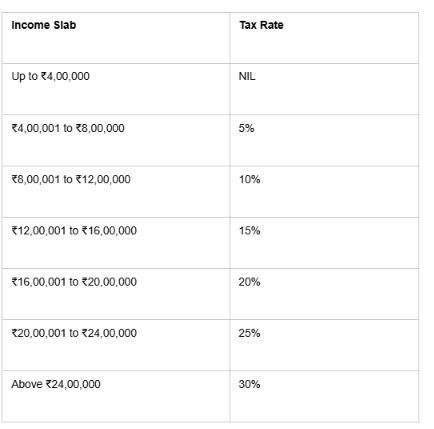
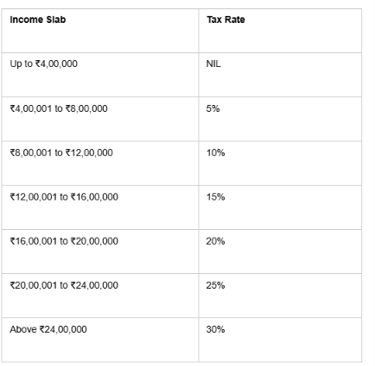
Pro Tip: Thanks to the enhanced tax rebate under Section 87A, individual resident taxpayers with a total taxable income up to ₹12,00,000 pay zero tax under the New Tax Regime. For salaried employees, factoring in the standard deduction of ₹75,000 means an effective tax-free threshold of up to ₹12,75 lakh.
3. Identify and Select the Correct ITR Form
Selecting the wrong ITR form can lead to your filing being designated as a "Defective Return" under Section 139(9), requiring you to correct and re-file the paperwork.
ITR-1 (Sahaj): This form is for resident individuals whose total income does not exceed ₹50 Lakhs. The income must originate from salary, one single house property, family pension, or other sources like bank interest.
Note: If you own more than one house property, you cannot use ITR-1.
ITR-2: Designed for individuals and Hindu Undivided Families (HUFs) who do not have business profits but have income from multiple house properties, capital gains (from shares or mutual funds), or foreign assets.
ITR-3: Mandatory for individuals who derive income from a registered business or a professional practice (such as freelancers, doctors, or consultants).
ITR-4 (Sugam): Applicable to individuals, HUFs, and firms with total income up to ₹50 Lakhs opting for the Prescriptive Taxation Scheme under Sections 44AD, 44ADA, or 44AE.
4. Register, Compute, and Upload
Once your documents are organized and your form is selected, you can proceed with the filing process:
Register: Visit the official Income Tax E-Filing Portal and register using your PAN as your unique User ID.
Pre-Fill Data: The portal automatically inputs major portions of your data from your AIS and Form 26AS. Carefully cross-verify these pre-filled values against your Form 16 and bank certificates.
Choose Your Regime: Explicitly confirm whether you are filing under the default New Tax Regime or opting out to choose the Old Tax Regime.
Pay Outstanding Dues: If your calculated tax exceeds the TDS already deducted, pay the self-assessment tax online before finalizing your submission.
5. Complete the Mandated E-Verification Step
Filing your return on the portal is only the first half of the process. Your ITR is not considered legally valid until it is verified.
Taxpayers have 30 days from the date of submission to verify their return. The most efficient method is electronic verification (e-Verify) utilizing an Aadhaar-linked OTP, net banking, or an Electronic Verification Code (EVC).
If you miss this 30-day window, the date of your verification is legally treated as your filing date. If that date falls past the July 31st deadline, your submission will be classified as a Belated Return, triggering late filing fees under Section 234F up to ₹5,000 and statutory interest charges.
Frequently asked question
Q1: Is it necessary to file an ITR if my income falls below the taxable limit?
Answer: While it may not be legally mandatory if your total gross income is below the basic exemption threshold, filing a "Nil Return" is highly recommended. A consistent history of filed ITRs serves as a formal proof of income, which is required when applying for home loans, vehicle financing, or international visas.
Q2: What happens if I make an error while filing my ITR?
Answer: If you realize you made a mistake regarding your income, deductions, or bank details after submission, you can rectify it by filing a Revised Return under Section 139(5). This revision must be submitted before the end of the relevant Assessment Year.
Q3: How do I track the status of my tax refund?
Answer: After your return is successfully filed and e-verified, you can track its progress by logging into the e-filing portal and navigating to the 'View Filed Returns' dashboard. Any approved refund will be directly credited to your pre-validated bank account.
Need Professional Assistance with Your Taxes?
Navigating your first tax season does not have to be a solo effort. Let our compliance experts handle your documentation, regime selection, and submissions smoothly.
Call us +91 7980984206
Copyright 2026 Filing4u. All Rights Reserved. Powered by Digital Nari
Get In Touch
Tel : +91 79809 84206
Email : info@filing4u.com
Locations : Kolkata | Bangalore | New Delhi | Mumbai
H.O: 10 Camac St, Elgin, Industry House, 11th Floor, Kolkata, West Bengal 700017